Showing posts with label Vitamix. Show all posts

6/18/13

The Proof is in the Pudding


This pudding recipe is one of my favorite concoctions to make in a Vitamix. The basic recipe is for Mint Chocolate Chip pudding, but I've also come up with variations for turning it into ice cream, and for flavoring tips to change it into Mocha Pudding or Chocolate Mint Pudding and other delights. I'll never get tired of it!

The surprising main ingredient is avocado, but you'd never know it by tasting a spoonful of this rich, satisfying dessert. The avocado adds a creamy texture - of course, in addition to adding a boost of good nutrients. The avocado creates the green color to the basic recipe, or blends with chocolate in the recipe variations to make a rich cocoa cream.

If avocados are not in your diet, out of season, or too pricey for a splurge, see my substitution of tofu. Many other substitutions in the basic recipe are noted. The coconut oil is an ingredient you won't want to change however; it is liquid at temperatures above 75 degrees, but hardens below that temperature, so, when this pudding is refrigerated or frozen, the texture thickens partly because of the coconut oil. Besides, coconut oil is very beneficial and nutrient dense.

Mint Chocolate Chip Pudding

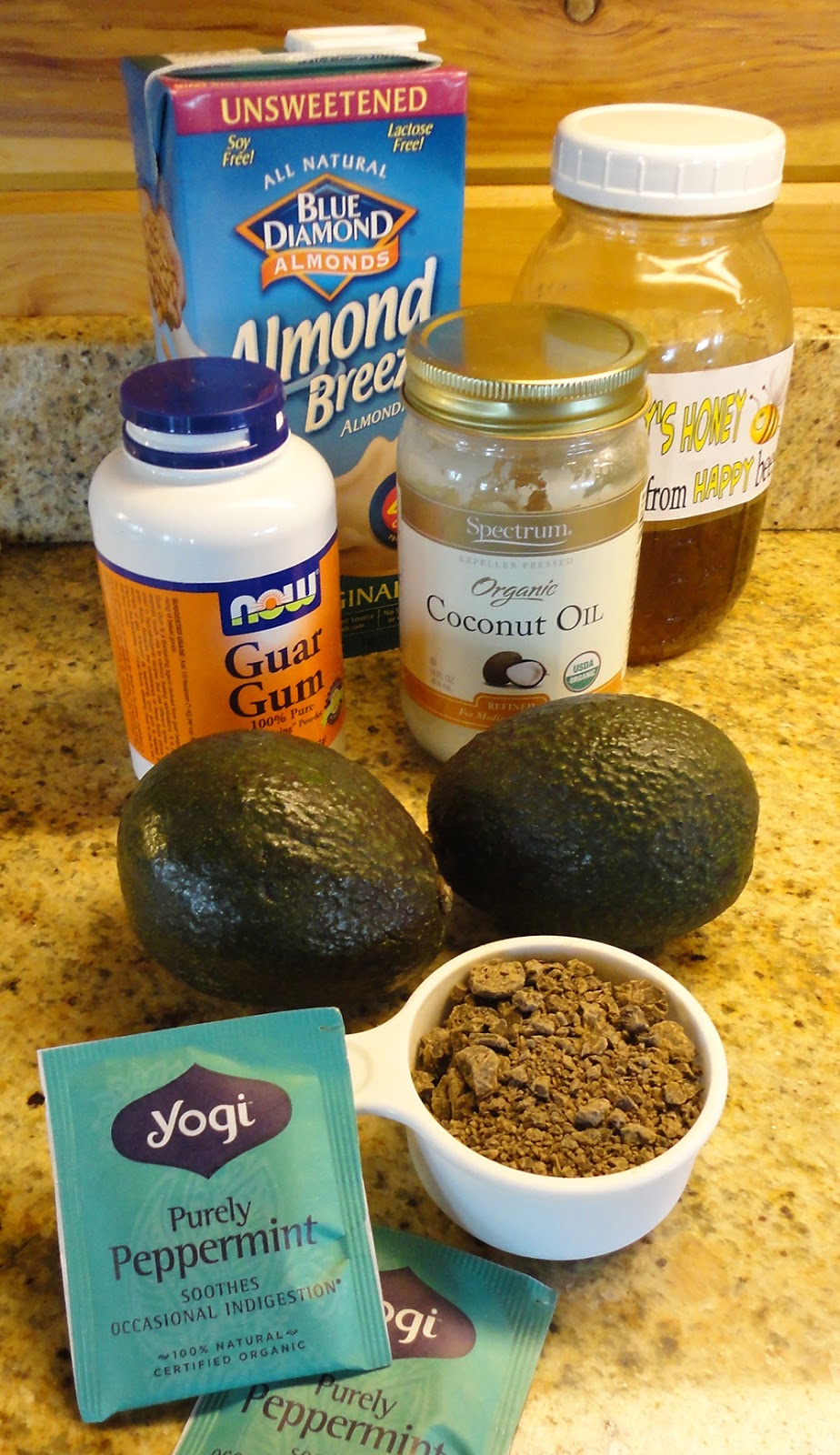
2 ripe avocados
1/2 c unsweetened almond milk
3 T honey
1 T coconut oil, warmed to liquid consistency so it mixes well
2 peppermint herbal tea bags
2 oz. dark chocolate bits (or broken pieces from a bar)

Remove the avocado skin and seed, and put the pulp into the Vitamix. Add everything else except the chocolate chunks into the Vitamix, tearing the tea bags to use the dried peppermint.


Run the Vitamix on 10 (the highest speed), mixing with the plunger tool, for 30-45 seconds, until a smooth green mixture forms. The mixture might get warm from the friction of blending, and this is the reason for not adding the chocolate chunks yet. (Actually, I made this mistake and it lead to the creation of some of the variations below.) Scrape the mixture out (this is the only hard part) and into a refrigerator container. When it has cooled, mix in the chocolate chunks. You can spoon the pudding into individual serving bowls to serve. If you are not ready to serve it right away, lay a piece of wax paper or plastic wrap over the surface or the avocado may oxidize and turn the top brown. You can alternately freeze the mixture and serve it as an ice cream, but I've found the timing a bit tricky… too long in the freezer and it's too hard. I'd suggest you try 30-45 minutes of freezing before serving.

VARIATIONS
Chocolate Pudding: Eliminate the peppermint. Add the chocolate chunks to the Vitamix with all the other ingredients.
Chocolate Raspberry: Eliminate the peppermint. Add the chocolate chunks to the Vitamix with all the other ingredients. After the pudding is spooned out, stir 1/2 cup of fresh or frozen raspberries into the pudding and continue to cool or freeze until ready to serve.
Mocha: Eliminate the peppermint. Add the chocolate chunks (or 2 T of unsweetened cocoa powder) plus 1 T of Roma or Cafix coffee-flavored grain powder to the Vitamix with all the other ingredients.
SUBSTITUTIONS
Mint: When I have fresh herbs from my garden, I eliminate the peppermint tea bags and use 1/4 c of fresh peppermint, spearmint, or chocolate mint leaves. Of course, you can substitute peppermint extract (try 1/2 t) for the dried or fresh mint leaves.
No avocados? Use 1 cup of organic firm tofu for the same creamy consistency. Use organic to insure the tofu is made from non-GMO soy.
Guar Gum:  This is a natural thickener and volume enhancer, sold as a powdery substance, made from a seed. If you don't have any, you might try using agar-agar flakes, arrowroot powder, or xanthan gum - but I haven't tested these other gelatin-like ingredients.
Chocolate: You can substitute 1/4 c of unsweetened cocoa powder for the chocolate chunks, and this can be added to the Vitamix with all the other ingredients. For a caffeine-free version, I usually use 1/4 c of unsweetened carob powder instead of the cocoa powder, so we can enjoy our pudding in the evening.
Almond Milk:  You can substitute unsweetened rice milk, coconut milk, organic soy milk, or nonfat organic cow's milk. You might even try fruit juice in place of all or some of the milk, like cherry or orange.

Other Flavors: 
Experiment with other flavorings… how about Chocolate Orange by adding orange juice in place of some of the milk, plus dried or fresh orange peel or orange extract? Or mix some chopped nuts into the chocolate variation. I plan to try the chocolate variation and adding some fresh cinnamon basil, anise hyssop, or lemon balm leaves from my garden. The possibilities are many - let me know your favorite!


7/20/12

Easy Homemade Tomato Paste

 Simple ingredients, quick procedure, easy storage, and delicious! I thought it was so cool to make my own tomato paste when I found this recipe online. I followed the instructions exactly, although I am not sure about the necessity of the final low-temperature baking step. I had such wonderful results, that I quickly applied the same method to creating a fabulous marinara sauce recipe (below).


TOMATO PASTE
(makes 1/2 cup)
  • 1 lb. fresh ripe tomatoes (about 3-4)
  • 1/4 sweet bell pepper (green or red)
  • 1 t salt
  • 1/2 t garlic powder
Core and quarter the tomatoes. Process all ingredients in a blender until smooth. (My Vitamix super-blender works great for this, pulverizing all the tomato seeds and skin.) Pour the liquid into a 3-qt. saucepan and bring to a boil. From the blender adding lots of air, the mix will be foamy and the foam will rise in the pot, so be prepared to stir and/or reduce the heat slightly. Let it boil for 8 minutes - halfway through the foaming will disappear.

Pour the mixture into a mesh cloth jelly bag, or line a strainer with coffee filters, and place over a bowl to collect the liquid. Strain for 30 minutes. (You can reserve the strained off liquid for soup stock or for a flavorful liquid for cooking rice.) Spoon the thick paste into a heat-proof mason jar and bake in the oven for 20 minutes at 250°. Remove from the oven and cool. Smooth the top surface with a spatula, then pour a skin of olive oil to coat the top of the tomato paste, cap the jar, and store in the refrigerator. As you use the tomato paste, recover the top with a glaze of oil and it will keep for months. Alternately, you could freeze dollops in ice cube trays, then pop them out and bag them, having them available to thaw whenever the need arises. NOTE: I doubled this recipe and the results were perfection!

I think you could use this as a basis for homemade catsup (ketchup) too, just adding a little vinegar and sweetener, maybe some dry mustard or ground cinnamon - I'll try it myself next time I grill fresh marinated whole okra!

=========

I've made homemade tomato sauce many times, chopping ingredients by hand or processing loads of tomatoes in my ROMA food strainer, or chopping everything in my Vitamix then low cooking it for hours to thicken the sauce. After making the tomato paste recipe above, I experimented and made the recipe below. So much faster and easier than any I've ever made before.

THICK DELICIOUS MARINARA SAUCE
makes about 1 quart
  • 5 lb. fresh ripe tomatoes (12-15), cored and cut in quarters
  • 1 onion, peeled and cut in half
  • 3 cloves garlic, peeled
  • 1 sweet pepper, stem and seeds removed
  • 2 t salt
  • 2 t fennel seeds
  • 2 t dry marjoram or oregano
  • 1 t black pepper
  • 1/4 c chopped fresh basil
Process all the ingredients in a super blender, like a VItamix, in 3 batches so you don't overfill the blender and end up with a tomato mess when the top blows off! The Vitamix will pulverize everything, making a foamy, smooth pinkish liquid.

Pour all the processed ingredients into a tall cooking pot. and bring to a boil. It will be foamy and the foam will rise in the pot, so be prepared to stir and/or reduce the heat slightly. Let it boil for 8 minutes - halfway through the foaming will disappear.

Pour the mixture into a mesh cloth jelly bag, or line a strainer with coffee filters, and place over a bowl to collect the liquid. Strain for 30 minutes. (You can reserve the strained off liquid for soup stock or for a flavorful liquid for cooking rice.)

I like it as thick as possible, and used the contents of the mesh bag for my sauce, but you might want to stir back some of the drained liquid to create the sauce consistency you prefer.

Try these recipes now while garden fresh tomatoes are available. Freeze well, so you can enjoy them all year 'round

12/28/11

Warning: Sinus Clearing Ahead

I was such a picky eater as a kid, no one would have predicted that I'd someday be a fan of hot, spicy, and strong flavored foods. Hot chile powder from New Mexico, wasabi paste with sushi, jalapenos - yum! Now I've up'd the bar, with my homegrown, homemade prepared horseradish.

One of those ugly dried roots in the grocery produce section caught my attention two years ago. I wondered if it would grow if I planted it in my veggie garden. I bought it, brought it home, dug a deep narrow hole, and buried the whole thick root in my spring garden soil. Boy, did it grow! Big, lush green foliage sprung up during the hot summer, first from the original root, then from the soil around the root. A little internet research told me that horseradish plants can be very invasive - oh no, I don't need a whole garden of horseradish! At the end of that first summer, I dug up the original plant and all the little baby plants it had sprouted. I replanted most of it, in an area I call my "excess" garden, where I allow invasive plants room to grow unrestricted (like mint). I kept some little roots, chopping fine and using with beef dishes. This was one potent horseradish!

I must add that I continued to pull up little horseradish volunteers in the vegetable garden during this past spring and summer. It wasn't hard to identify them - just break off a leaf and give it a whiff! The leaves are edible, by the way, and make a tasty addition to a salad, or an interesting flavor note in a stir-fry. By July, I stopped seeing any more horseradish greens, so I had cleared out all the invasive roots. In the excess garden where I had transplanted the horseradish the previous fall, the plants again grew vigorously. My November garden post pictures some roots I harvested this fall: horseradish, jerusalem artichokes, and beets.

Now, what to do with the horseradish roots? It wasn't difficult to find directions online for making my own prepared horseradish. I was warned by a friend that I should grind the roots outdoors, due to the very pungent horseradish "fumes" which would be released. If you are a fan of horseradish, you know the taste and smell will rush into your sinuses - a very different "hot" than with hot peppers. I had dug up several large pieces of root plus some long 1/2 inch diameter pieces, and I scrubbed them with a veggie brush, revealing beautiful white roots. It was good that I had harvested a sizable amount, since my Vitamix blender chops best when there is at least a cup of food in the container. (I reserved some horseradish chopped as thin slivers, to air-dehydrate and grind it into a powder, which worked out very well also). I read that freshly grated horseradish root can turn brown as it oxidizes, so I didn't cut it up until I was ready to use it.

So out to the porch table I went, ground the horseradish to a fine chop in the Vitamix - do not inhale when you open the lid! I added a touch of salt, then added a small amount of lemon juice (to keep it from discoloring) and vinegar. One recipe I read calls for 1/4 to 1/3 c vinegar, 1/2 to 1 tsp salt, and 2 cups of freshly grated horseradish. I wasn't so precise in my measurements; I watched the consistency as I blended, adding only as much liquid as needed to make it into a thick paste.

Viola! Extra-potent homemade horseradish! I made enough to fill 3 small jars, refrigerated one for immediate use, and froze two for future enjoyment. Cooking destroys the mustard oils which give horseradish its heat, so it's best to use uncooked, or add last to cooked dishes. Horseradish is traditional with roast beef, great with potato dishes, a good addition to sandwiches, and yummy in deviled eggs. Ask for a taste if you visit!

11/2/11

Chocolate Mousse

Several friends have asked for this delicious recipe, which has unusual and surprising ingredients. It must be blended very smooth, so a powerful blender like a Vitamix or Blendtec works best. I adapted this from a recipe in a blog by Zoe V, a raw foodie, with slight changes. Remember, ingredients in bright red are explained in more detail on the INGREDIENTS list in the right sidebar.

CHOCOLATE MOUSSE
1/2 c soy milk or other liquid*
3 ripe avocados, peel and pit discarded
1/3 c honey OR light agave nectar
2 T coconut oil
1 t balsamic vinegar
2 t vanilla extract
1/2 t ground cinnamon
pinch of salt
1/3 c unsweetened cocoa powder
A few drops of liquid stevia, optional
More liquid* as needed

* For the liquid, choose according to your taste; organic soy or almond milk, 100% cherry juice, water

Add all ingredients except the cocao powder in the blender and emulsify. Because the mixture is dry you may need to use the temper to push the ingredients toward the blades. Turn the blender off, scrape the sides into the mix, and add the cocao powder. Blend until well incorporated, adding additional liquid until it is very creamy. Eat like a pudding, use as a fruit dip, or spoon into a pie crust and top with whipped cream!

Try your own taste variations, like adding peppermint leaves or extract to the mix, adding instant coffee or a coffee-flavored powder like Roma, organic orange zest, or try stirring chopped dark chocolate chunks into the finished mousse.

NOTES: Coconut oil is very healthful, and will be solid unless your room temperature is quite hot, so liquify by heating gently if necessary - I submerge it in a measuring cup within a container of hot water for a few minutes. Avocado sizes vary, but the portion amount is not critical to the success of this recipe; avocados are also very healthful and creamy but they don't have strong flavor on their own, so they add great texture to this recipe. I like to use Rapunzel Organic Cocoa Powder. I use either "Ohgave" light organic agave nectar or honey gathered and processed by my friend and neighbor, Susan. For a slightly sweeter taste, I add a few drops of liquid stevia extract, which I create myself from stevia leaves I grow.