Showing posts with label celeriac. Show all posts

1/16/12

January in the Vegetable Garden

This week we return to 10 hours of daylight in Zone 7, and my new garden seeds will be arriving tomorrow. So my thoughts are on gardening 2012! Meanwhile, I am still harvesting fresh veggies from the garden daily. Our winter continues to be mild, with regular rainfall. I actually transplanted some of those tiny celeriac seedlings from the cold frame to the garden a few days before Christmas, and they are growing fine. I bought a big ugly celeriac root at the supermarket and tried planting it too - no sign of life yet though. Earlier this month the mercury fell to about 15 degrees for two nights and we had a light snow cover; I didn't bother to cover the brussels sprouts and they survived - I harvested some, halved them, and sauteed them with onions and tamari soy sauce one day last week… they tasted excellent! I've been picking and using fennel as a raw veggie dipper with homemade dips (cut like celery stalks), as well as sliced thin in a salad with apples, toasted almonds, and my Caesar dressing. I love the fennel seeds I saved last summer too - they are a great addition, whole, to my morning granola, and I've also ground them and added to biscotti recipes. A few beets are still in the ground from last summer, probably big and woody now, and they continue to provide fresh leaves for harvest. Many wild plants are growing well this winter too; the white clover we seeded as a ground cover has established itself in a healthy patch just off the front steps, and I use the fresh leaves in our green smoothies. My crocuses have begun to flower and daffodils are several inches out of the ground, so spring is just around the corner here.

More of my gardening time is spent indoors this month, as I plan what I'll be growing. Here are the basic lessons which my 2011 garden taught me:
  • Don't grow plants which attract bugs and succumb to disease
I am surrendering to some of my bug battles, and simply not planting many of the vegetables most attractive to them. This means I will not grow squash-family plants, since I got little or no harvest last year, due to squash bugs. No zucchini, no butternut squash, no melons. I will try one new heirloom "pumpkin" called Cushaw (which is an edible winter squash) which is described as resistant to squash bugs. I am also planning to grow a gherkin instead of cucumbers, for fresh eating. I am not planting calendula, which is a very pretty edible and medicinal "pot marigold" - even the ones which reseeded themselves in late fall grew full of little bug holes in the leaves. The amaranth I tried to grow also succumbed to bug attacks, so that's off my grow list too, as well as oriental greens such as chinese cabbage, tat soi, pak choy and others I've tried. I now know that fall/winter is the best time for my cabbage family favorites, like brussels sprouts, kale, and collard greens, and, fortunately, their pests are not around in the cooler seasons, so that's when I will grow them from now on.

A solution to tomato blight still escapes me, so here is the 2012 tomato plan:
  1. Plant "blight resistant" varieties only (I've found and purchased seeds for two heirloom varieties, Legend and Old Brooks Red)
  2. Plant the tomato plants outside the vegetable garden this year
  3. Try ground cinnamon on the ground around the plants as an anti-fungal (a tip from gardener friend John)
  4. Don't start the tomatoes outdoors as early - makes them more susceptible to "early" blight
  5. Clean all the tomato cages and garden tools, so fungus residue from last year is destroyed
  •  Don't grow plants with little yield
The only snap beans I intend to grow are my favorite Blue Lake Bush beans. I planted yellow wax beans at the same time, and the yellow beans took forever to mature, with very sparse production. Meantime I was harvesting the green beans continually, and the Blue Lakes are great raw, cooked and frozen. The "bush" nature of this heirloom means it doesn't need trellising, since the plants only grow about 18-24" tall and stand upright on their own.
 
  • Don't grow plants which take up too much space, when smaller comparable varieties taste as good
The Thai "long beans" were an interesting novelty, and tasted ok, but their long vines overtook and spilled out of one corner of the garden. Yes, I only needed about 2 beans to make a side dish for two, but they took a long time to mature. And the flowers attracted too many little biting bees. Fortunately, I used up the whole envelope of seeds.
  • Grow plants with a longer harvesting season
I was disappointed with my sweet peppers last summer - even though I started the plants very early and grew one in a red plastic Kozy Koat, I didn't start harvesting any for a long long time. So this year I'm growing some described as early, and also described as "dwarf" which should result in quicker harvesting.

  • Don't grow too many of one vegetable
If I grow any jalapenos or eggplants this year, I know that one plant of each is enough. I have a large supply of dried and powdered jalapenos, so I only need some to use fresh, in salsa and other dishes. I prefer eggplant used fresh also, and one eggplant at a time is all I need to harvest; one plant will give me a supply over many weeks. I will again limit my planting of basil, since I still have lots of frozen pesto. I am going to try "lime basil" as well as a large-leaf variety.
  • Grow more edible greens in the hottest part of the growing season
Since we've adopted a routine of daily green smoothies, I've loved having cool weather greens to harvest. Now I want to be sure to have a variety of greens to harvest in warm weather, when spinach and many lettuces will not grow well. The "heat tolerant" edible greens I look forward to planting this year include: two variaties of edible Japanese chrysanthemums; leaves of black garbanzo beans (I can harvest the pods and beans too); two spinach-tasting plants which are not true spinaches: "strawberry spinach" which is related to lamb's quarters, and "red malabar spinach" which is a heat loving vine of greenery; and a bronze lettuce. Some of these are for fresh and cooked recipes - you'll be hearing more about how they taste later this year.
  • Try new plants
I am adding okra to my garden this year. I've ordered seeds for a dwarf variety - only 3 feet tall! As you can tell, this is normally a very tall plant. It grows well here in the south, seemingly with no pests or diseases, and I've developed a taste for it. My friends Bill and Julie grill the whole pods (with a little coating of oil) until crunchy and eat them like french fries, and they are yummy this way. I am also planting more herbs, including lovage (celery flavor), stevia (so I can dry the leaves again, for a great natural sweetener), shiso (a red leaf, used to color pickled Japanese ginger), dock, and cilantro (a hot-weather cilantro).

Start planning your garden for 2012, even if it's just a pot of herbs on your porch!

12/16/11

December in the Veggie Garden

Wild chickweed, edible and tasty, raw or cooked

My December garden doesn't look too much different from November. Our weather continues to be relatively mild with regular precipitation, so the winter vegetables are growing well. I was surprised and delighted to discover some "wild" greens I foraged last spring are lush and green again now. I confirmed the identity of Chickweed with my fellow foraging friend Judy; it's a mildly flavored, very nourishing plant, and can be used in a salad, in a green smoothie, or cooked lightly. It is growing in abundance in the rich soil outside my compost bin, and I am harvesting it to use almost daily.

From the garden, I've been picking romaine and leaf lettuce continually for salads, lots of beet greens (and beet "reds") to use raw and cooked, scallions from the onion bed, and tiny spinach leaves. I've twice harvested enough brussels sprouts for a meal. I lightly sauteed them with onions and they were delicious! As a first-time collard grower, I am waiting to see if the plants grow replacements where I've picked the Barbie-size cabbage heads at the intersections of the leaf with the main stem. I've also loved my collards. One morning I found them covered with beautiful lacy patterns of frost and figured they'd been killed. By afternoon the air was warm and they looked as healthy as ever, so their season continues. My "straw" mulch on the strawberry plants has proven to be a mistake; it's hay with seeds in it, so green grass is starting to grow everywhere - I'll be removing the straw and weeding soon!


I've also got a few things growing in the cold frame, which I keep closed unless the day is sunny and/or above 50 degrees. The flat leaf parsley in the cold frame is growing well, and the other seedlings I planted there are healthy although slow growing: romaine, spinach, red beets, leaf lettuce. The celeriac seedlings are still as tiny as they were months ago; I don't know what went wrong there.

Self-seeded cilantro, growing among larkspur and weeds!
I extended the growing season on some of my herbs by potting them in the fall and growing them by my south-facing basement window, where the temperature is usually 50-60 degrees. The lemon grass is growing tall and strong, so I'll be able to replant it outdoors in spring if the clumps I grew last year don't survive outside. I also have a pot of basil, which is a warm-weather annual. I have little pots of cilantro and mint also, but I am still able to harvest those from the outdoor gardens, along with lemon balm, parsley, rosemary, chives, sage, thyme, and fennel… yum! I planted a cilantro bed in the garden, but I also let it grow where it can go to seed (harvested as coriander) and replant itself, which it does very well. This time of year I also grow sprouts in the kitchen, for additional fresh harvests. I most often grow a mix of alfalfa, broccoli, and red clover sprouting seeds.


For those interested in learning more about cold weather gardening, I recommend the book The Winter Harvest Handbook by Eliot Coleman (fourseasonfarm.com). This man, with partner Barbara Damrosch, makes his living selling produce, year round - in Maine! He uses hot houses, cold houses, row covers, specially chosen varieties, and other means. The book is easy to read, very informative, and has a list of good resources. The successes and failures of his many years in business can be boiled down to methods a home gardener can employ.

If you are considering gardening for the first time, All New Square Foot Garden, by Mel Bartholomew (squarefootgardening.com), gives fabulous step by step instructions. The theory, based on growing in small, manageable raised beds, is helpful to experienced gardeners too. I've watched novice gardeners fail when, in their excitement, they plant a huge garden, only to discover they can't keep up with the work. They end up discouraged, with little to show for all their initial effort. This book helps you start small and enjoy success.

This time of year, gardeners like me start thinking about year's garden, especially when seed catalogs arrive in the mail. Somehow I got on the mailing list and received the most beautiful seed catalog I had ever seen last year. It's from Baker's Creek Heirloom Seeds. You can request it free and can view the entire catalog online: rareseeds.com. What amazed me were all the vegetables and fruits which I never even knew existed! This company has collected heirloom seeds from all over the world, with many interesting stories about the sources. There's page after page of tomato varieties, in all different colors, sizes, and shapes. There are squashes with colorful spots and bumpy textures on their skin. There are beans with "wings". Seeds from Iran, Thailand, former Soviet countries, and all over the USA. I love going through the catalog, over and over. Next month I'll report on new seeds I plan to grow in 2012.

'Hope you'll be enjoying home grown squashes and sweet potatoes as part of your holiday meals!

8/16/11

August in the Vegetable Garden


Several people in the last week have asked me if I am "winding down" my gardening season. No way! I'm harvesting continuously, growing late harvest plants, starting more seedlings, and getting ready for new crops when the weather cools. That's one of the pluses about living in Zone 7, with its long growing season.
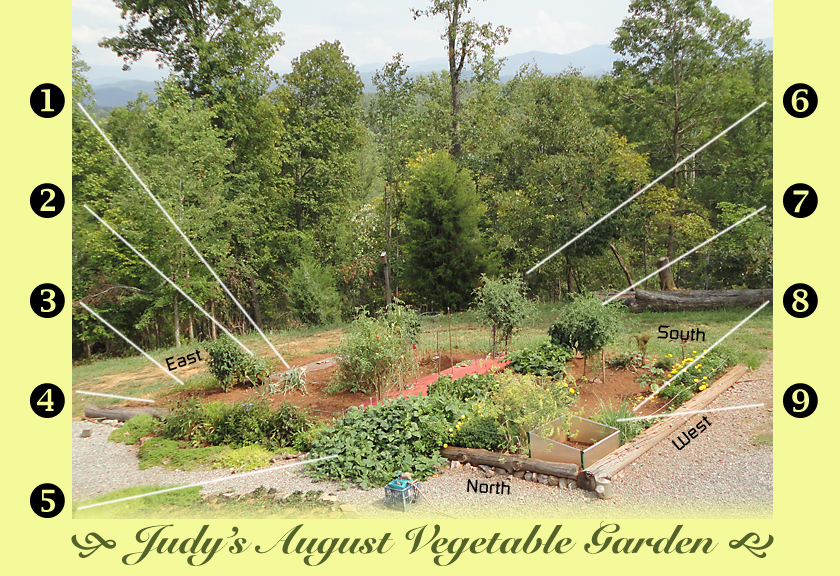
  1. LEEKS - I just dug my first leek, to use in a stir fry later today. The stalk is about 1" diameter, and there is about 6" of white which is the part that grew below ground - not bad in our heavy clay soil. Don't think I'll grow these again, since I had to baby the seedling for a long period and many did not survive transplanting to the garden. Onions grow better for me.
  2. EGGPLANT - Both plants are producing fruit, but not so many that I am overwhelmed yet. Watch for my upcoming post of a recipe for Eggplant Parmesan - gluten free, low carbs - which is delicious.
  3. SWEET POTATOES - See the close up photos of how the grasshoppers keep defoliating the vines. I have been able to harvest some of the edible leaves  - which taste like mild spinach - when they grow back. Actually, it's a good system, since the new leaves are the most tender, vs. those that might grow on the vines for months.
  4. STRAWBERRIES - I thinned out the strawberry beds, discarding the overgrowth of babies. The main plants don't look very good, our hot weather causing dried brown leaves around the edges, but they are alive and show new growth in the centers. I had a great harvest this past spring from baby plants set out last fall, so I plan to do the same in any bare spots in the bed once our weather cools.
  5. THAI LONG BEANS - Pretty flowers, long vines and a long time for the beans to form. I hope to harvest a good crop very soon.
  6. TOMATOES - I removed the tomato plants most effected by blight and I keep pulling leaves from the lower stems of the remaining plants. So now I have several "topiary" tomato plants. But they are still producing a small crop, which I am happy to have. I've started a few late crop tomatoes again, since the first ones dried up and died in the heat.
  7. PEPPERS - The pointer is to my tall Chinese Giant sweet pepper plant, which, at long last, is producing little green peppers. Also, I took one of my strongest tomato cages and moved it as a support for the larger of my two jalapeno plants, since the branches were getting so heavy with ripening hot peppers. Green jalapenos are sold in markets, but I prefer to pick them when they turn red and black, sometimes with fine ivory veins on the skins.
  8. SQUASHES - I direct sowed seeds of various squash-family plants in July, and now I have a zucchini, 2 cantaloupes, 2 butternut squashes, 2 cucumbers and one casaba melon plant. I am keeping a close eye on them, and whenever I see the little brown egg clusters of the squash beetle I remove the leaf. I occasionally scatter [food grade] diatomaceous earth on the soil around these plants; it's an organic insecticide, an abrasive white powder made from fossilized remains of marine algae. Unfortunately, it washes away with watering and with rain. Every plant is flowering, and I am optimistic that the warm weather will continue so I can harvest these yummy veggies, since my earlier plantings succumbed to pests and disease.
  9. LEMON GRASS - I bought a little pot of Lemon Grass, a strong lemon flavored herb good in a stir fry or tea, and it's thriving in my garden. I am not sure if it will grow as a perennial in my zone; if so, I'll move it to the herb garden.
CELERY - I read of this trick online, and so far it is working: buy a celery stalk, cut about 2" above the bottom, and stick that end in about 1" of warm water for a few days. Soon, new greenery starts to grow from the center. At this point, I set the developing plant in my garden, mounding some soil around it and keeping it moist. It's continuing to grow taller, slowly. The instructions also recommended cutting the top and bottom from a liter bottle, pushing it into the soil around the plant. Otherwise, the stems fall over as they grow taller. Even if I only get celery green tops, it's a fun experiment.
BEANS - While I am waiting for the Long Beans to grow, another small bed of Bush Blue Lake green beans is about ready to harvest. I am giving up on yellow beans. Mine took a very long time to ripen, and the harvest is minimal. I don't think the flavor is as good as green beans either.

FALL GARDENING
After wasting lots of seeds by trying to germinate lettuce in the garden this summer, I learned from the internet that lettuce seeds have a thermal mechanism which tells them not to germinate at temperatures above 70 degrees F. Since our basement stays near 60 degrees year round, I started a big flat of baby romaine and black seeded simpson lettuces a few weeks ago. In two days, they had sprouted! Flats of kale and of brussels sprouts seeds, as well as two varieties of tomatoes, are growing well in the basement south-facing window. I'm also trying a new vegetable - celeriac. It is a big round root, a member of the celery family, very popular in Europe. It has celery flavor and can be stored like a potato. It is recommended as a fall crop, and takes weeks to germinate. So I started its very tiny seeds in a tray indoors also, and I've seen the first 3 seedlings emerge this week. Also, in preparation for fall planting, I have started "cold stratification" of some spinach seeds. This is done by putting the seeds in a small zipper bag with a tiny amount of water, then putting them in the freezer for about a week. Remove from the freezer for a day, then repeat. This method helps the germination of spinach seeds, as well as other seeds, by imitating the freezing and thawing of winter season.